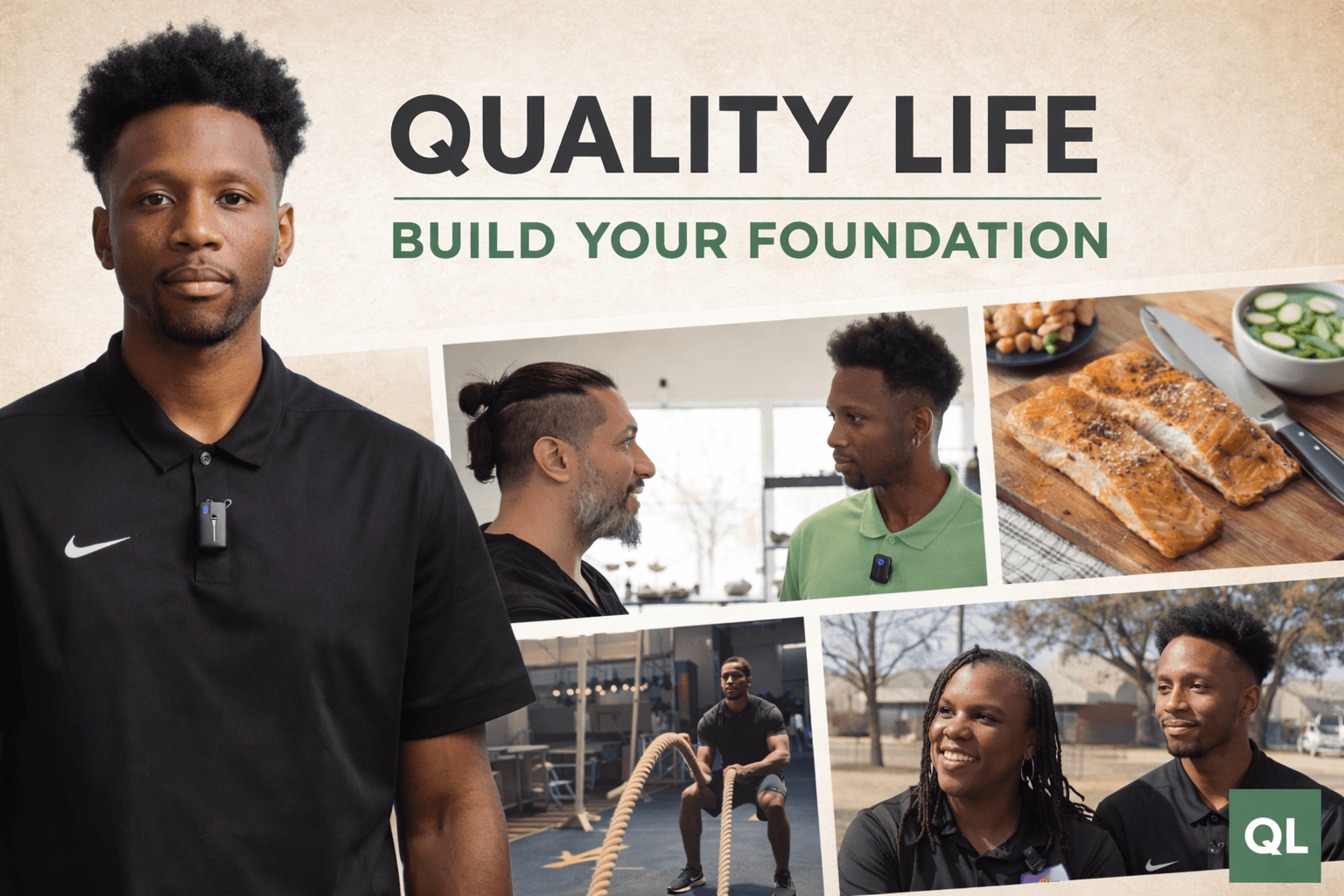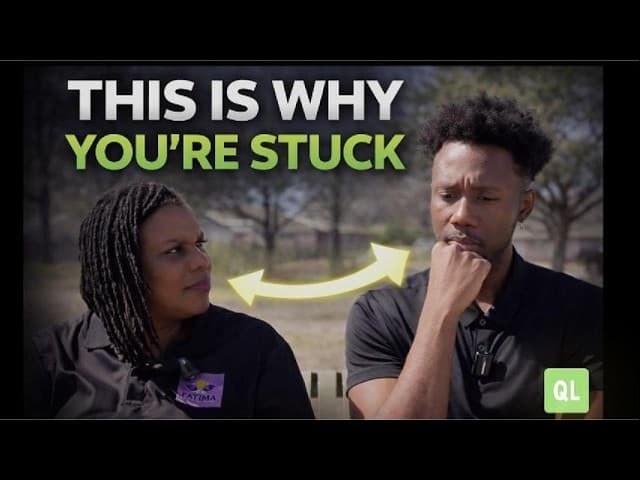
In this Episode of Quality Life, I brought Fatima on to dive deeper into one of the three core pillars we talk about all the time: mind, movement, and nutrition. Fatima specializes in the mental side.
We wanted to address a common challenge people face—feeling like they don't have time, not knowing where to begin, or believing that change is too difficult.
Where Does Someone Begin?
We started with a simple but powerful question: Where does someone begin if they want to improve their mental health?
Everything starts with a decision.
Ask yourself: "If nothing in my life changed, what would my future look like?"
That question creates awareness. From there, it becomes about being intentional and choosing to make a change.
From Intention to Daily Action
Once that decision is made, the next step is understanding how to turn that intention into daily action. Mental health isn't just a one-time choice—it becomes a lifestyle.
Fatima emphasized that your thoughts, feelings, and behaviors are all connected.
- If your thoughts are rooted in fear or doubt, your actions will reflect that.
- But if you can visualize success and genuinely believe in the outcome, your behavior begins to align with that vision.
It all comes down to one question: How bad do you want it?
Define Clear Goals
We also discussed the importance of defining clear goals.
These aren't enough. Goals need to be specific and measurable.
This is where systems come into play.
You're not just hoping for results—you're building a structure that supports them.
There Is No Perfect Time
Another key point we explored is that there is no perfect time to start. Many people wait until they feel ready, but that moment rarely comes.
Growth requires discomfort.
You have to be willing to take the first step even when you feel unprepared. Progress happens when you move forward despite fear.
Consistency, Not Perfection
We also acknowledged that not every day will be perfect. Some days will be harder than others, especially when dealing with mental health challenges.
The goal isn't perfection—it's consistency.
- On good days, you push forward.
- On tough days, you avoid self-judgment and keep going.
Writing down your goals, visualizing outcomes, and checking in with yourself regularly can help maintain that momentum.
The Power of Choice
A major theme throughout this conversation is choice. You can continue living in a way that leads to burnout, stress, or poor health, or you can choose to create a better quality of life.
That shift doesn't happen overnight, but it starts with one intentional decision followed by consistent action.
Your Environment Matters
We also talked about the importance of your environment. Your surroundings influence your habits more than you realize.
Whether it's your physical space, your social circle, or your daily routines, everything plays a role in shaping your behavior.
If you want change, you have to create an environment that supports that change.
Everything Is Connected
Another critical takeaway is that everything is connected. Your mental health, your nutrition, your movement, your environment—they all work together.
If one area is off, it affects the others.
True healing and growth come from addressing the whole system, not just one piece.
Helping vs. Empowering
Toward the end, we made an important distinction between helping and empowering.
Helping
Provides temporary relief
Empowerment
Creates lasting change
The goal is not just to give people information, but to inspire action—to get someone to say, "I need to start today." Whether that's journaling, planning meals, or simply becoming more aware of their habits, small steps create real momentum.
We even tied this concept back to nature. Just like a plant needs the right environment, nutrients, and care to grow, so do we.
You can't expect something to thrive without nurturing it. The same applies to your health, your mindset, and your life.
Take One Small Step
To close, Fatima challenged everyone to take one small step. It doesn't have to be perfect. It just has to be intentional.
Small changes each day lead to a bigger impact.
The real question is: What are you going to do with this information?
Share this article: